
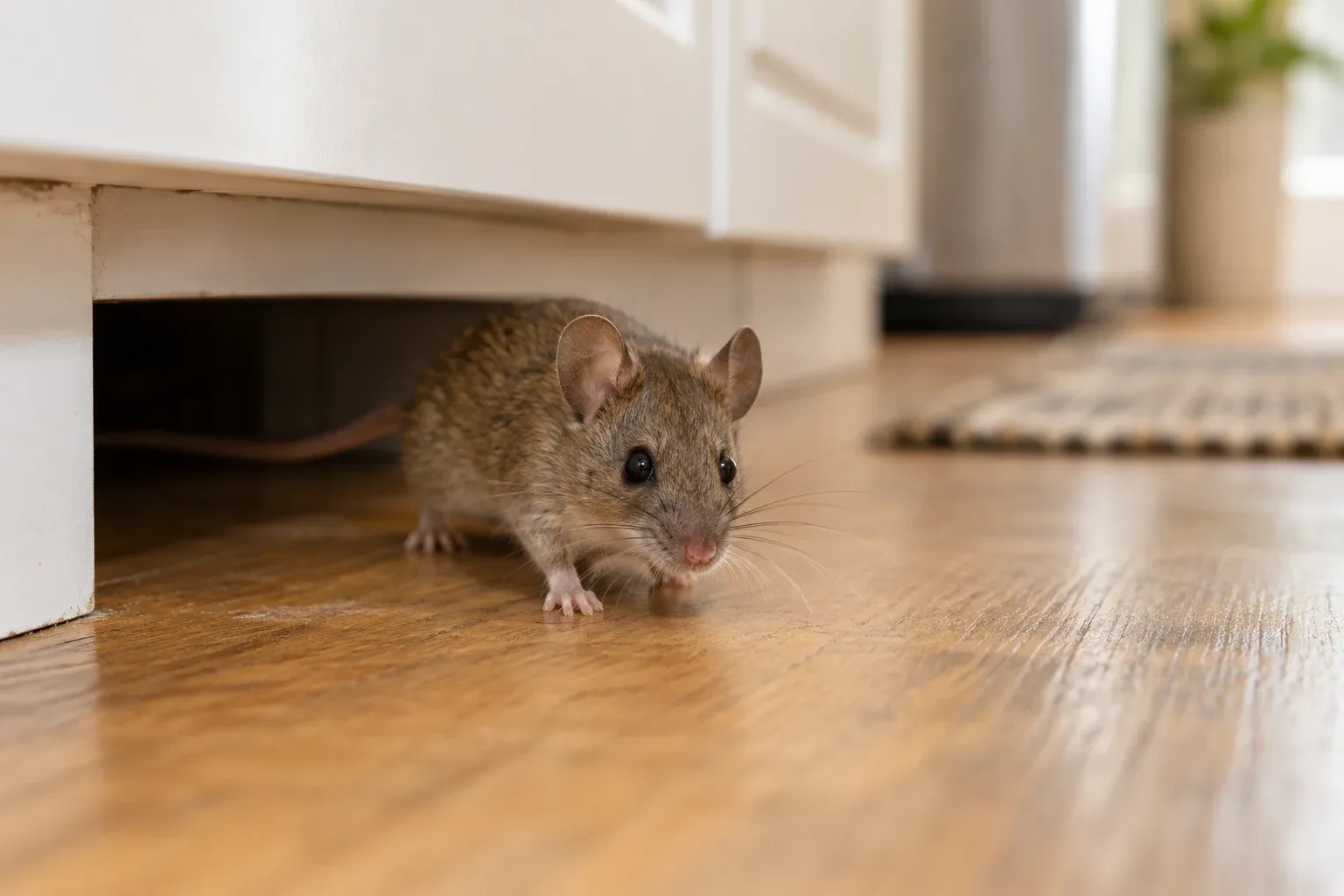
Are These New Mice or Mice That Never Left?
Both are possible. Mice can stay behind cabinets, in wall spaces, or in attic insulation while you catch the ones visiting your kitchen. You may also clear out the mice indoors but leave a gap beneath a garage door or around a pipe that new mice can use.
You usually can't tell which situation you're dealing with from one sighting. Look at where signs return, how soon they appear after cleanup, and whether the same areas keep showing activity. That gives you more to work with than the number of mice caught.
Seven Reasons Mice Keep Coming Back
1. Other Mice Are Still Hiding
Catching a mouse behind the refrigerator doesn't mean you've reached the nest. Other mice may be using a wall cavity, pantry void, or storage area. If you stop trapping after the first catch, you may miss continued activity nearby.
2. An Entry Point Is Still Open
A house mouse can squeeze through an opening about a quarter-inch wide. Gaps beside utility pipes, worn door sweeps, damaged vents, and foundation joints are easy to overlook. If fresh mice can enter, trapping won't provide lasting control on its own.
3. Traps Aren't on the Routes Mice Use
House mice tend to follow walls and sheltered edges. A trap in the middle of the room may be ignored while mice travel behind the cabinets. Signs such as droppings and gnaw marks help identify better locations. The CDC recommends placing snap traps against a wall, with the baited end facing it.
4. There Aren't Enough Traps, or You Stop Too Early
One trap may not cover a kitchen, pantry, and garage. If mice are active in several areas, trapping needs to reflect those routes. Check traps daily and keep watching for fresh evidence rather than assuming an empty trap means the house is clear.
5. Food and Shelter Are Still Available
Open pet-food bags, crumbs behind appliances, seed stored in a garage, and cluttered boxes can support mouse activity. Cleaning is important, but even a tidy home can have mice when entry points remain open. Food control supports trapping; it doesn't replace it.
6. An Old Repair Can Be Chewed Open
Expanding foam alone isn't a dependable mouse barrier. Mice can gnaw through it, and a door seal may wear down again. Suitable repairs may involve metal mesh, flashing, or a fitted sweep, depending on the opening. Don't block required ventilation or seal suspected active routes without checking for mice indoors.
7. You're Treating the Sighting, Not the Source
A mouse runs across the kitchen, so all the traps go in the kitchen. But droppings near the furnace or gaps around the laundry pipes may reveal where activity starts. Connecting the evidence across rooms helps prevent the same problem from repeating.
How to Tell Whether Mice Are Still Active
You don't need to see a mouse every night to have an ongoing problem. Check for:
- Droppings appearing after safe cleanup: New deposits in the same drawer or behind an appliance are more useful evidence than guessing how old a dropping looks.
- New gnaw marks: Fresh damage on food packaging, stored boxes, or other materials suggests recent activity.
- Moved nesting material or new tracks: Shredded paper, disturbed dust, or signs along a wall may reveal a route.
- Repeated noises or sightings: Scratching by itself can have other causes, but noises alongside droppings make mouse activity more likely.
Keep brief notes about the room, date, and type of sign. If activity continues, those details make an inspection more useful. For hidden-space clues, see signs of mice in walls.
What to Do When Mouse Traps Aren't Solving the Problem
Check the Places Mice Travel
Look behind appliances, along the edges of cabinets, near food storage, and around garage or basement utility openings. Focus on evidence, not just the last place you saw a mouse. Avoid disturbing nesting material or contaminated dust.
Use Traps Correctly and Check Them Daily
Use appropriately sized snap traps according to their instructions, along active routes and away from children and pets. Check them daily and dispose of captured mice safely. An empty trap tells you little if fresh signs continue elsewhere.
Find Entry Points Before Repairing Them
Check both outside and inside: garage thresholds, foundation gaps, pipe penetrations, vents, and roof edges. Coordinate removal and rodent exclusion if mice may still be inside. Sealing every opening immediately can leave mice trapped in inaccessible spaces.
Remove Easy Food and Hiding Places
Move pantry items and pet food into containers with tight lids. Clean crumbs and spills, cover garbage, and reduce clutter around storage areas. These steps make the home less supportive of mice but aren't a substitute for removing an existing infestation.
Monitor, Rather Than Guess
Keep looking for fresh droppings, gnawing, or sightings after trapping. The CDC recommends continuing trapping until rodents and their signs are gone. If new evidence appears, reassess the trapping locations and access points instead of repeating the same setup indefinitely.
When to Call for Professional Mice Control
If mice keep coming back after trapping, the problem may extend beyond an accessible kitchen or pantry. Consider professional help when droppings return in several rooms, scratching seems to come from walls or ceilings, traps aren't resolving the activity, or entry points are difficult to reach.
A mice exterminator can evaluate activity, likely nesting spaces, treatment methods, and possible entry-point repairs. Ask whether inspection, follow-up, and exclusion are included in the proposed service. These may be separate parts of the work. Our Rodent Control Janesville WI overview explains how treatment and entry-point solutions work together.
Janesville Rodent Pros provides mice control in Janesville, WI and nearby communities. Tell us what you've tried and where you're still finding signs.
Clean Mouse Droppings Safely
Don't dry sweep or vacuum droppings. That can put contaminated particles into the air. Follow the CDC's rodent cleanup instructions: use appropriate protective gloves, wet affected material with a suitable disinfectant, and clean it up as directed. Discard food that shows signs of contamination.
If there is heavy waste or nesting material in an attic or another hard-to-reach area, ask about safe cleanup before disturbing it.
Frequently Asked Questions
Why Do I Keep Catching Mice in the Same Room?
That room may be near a food source or travel route. Other mice could still be inside, or an opening could allow more in. Check surrounding areas for droppings and possible access points.
Can Mice Return Even if My House Is Clean?
Yes. Good food storage and housekeeping reduce attractants, but mice can still enter through gaps around doors, pipes, and vents. Exclusion matters even in a clean home.
If My Traps Are Empty, Does That Mean the Mice Are Gone?
Not necessarily. Trap placement may miss their routes. Look for new droppings, gnaw marks, or sightings rather than judging by one empty trap.
Should I Seal Mouse Holes as Soon as I Find Them?
Entry-point repairs are important, but first consider whether mice are still inside. Removal and exclusion may need to happen together so mice aren't trapped in hidden spaces.
Do Ultrasonic Mouse Repellers Stop Repeat Infestations?
Ultrasonic devices aren't a dependable solution. The University of California's Integrated Pest Management program reports that high-frequency electronic devices are not effective for house mouse control. Inspection, trapping, sanitation, and exclusion are better-supported approaches.
Still Finding Mice After Trapping?
Fresh droppings, scratching in the walls, or another mouse in the kitchen? Janesville Rodent Pros can help you discuss mice control and the openings that may be allowing the problem to continue.