
How Small an Opening Can Rodents Use?
A house mouse can squeeze through an opening about one-quarter inch wide, roughly the width of a pencil. Rats generally need larger openings, but both can use gaps that homeowners easily overlook.
Rodents don't need a large hole in an exterior wall. A worn door seal, an opening around a utility pipe, or a damaged vent may provide access.
Some gaps also become larger when mice or rats gnaw at surrounding materials.
The important question isn't simply where you found a rodent. It's how that rodent entered the building and which route it may be using indoors.
9 Common Rodent Entry Points Around Your Home
Start with the exterior of the house. Look for openings around building materials, utilities, doors, and ventilation systems.
1. Gaps Around Pipes and Utility Lines
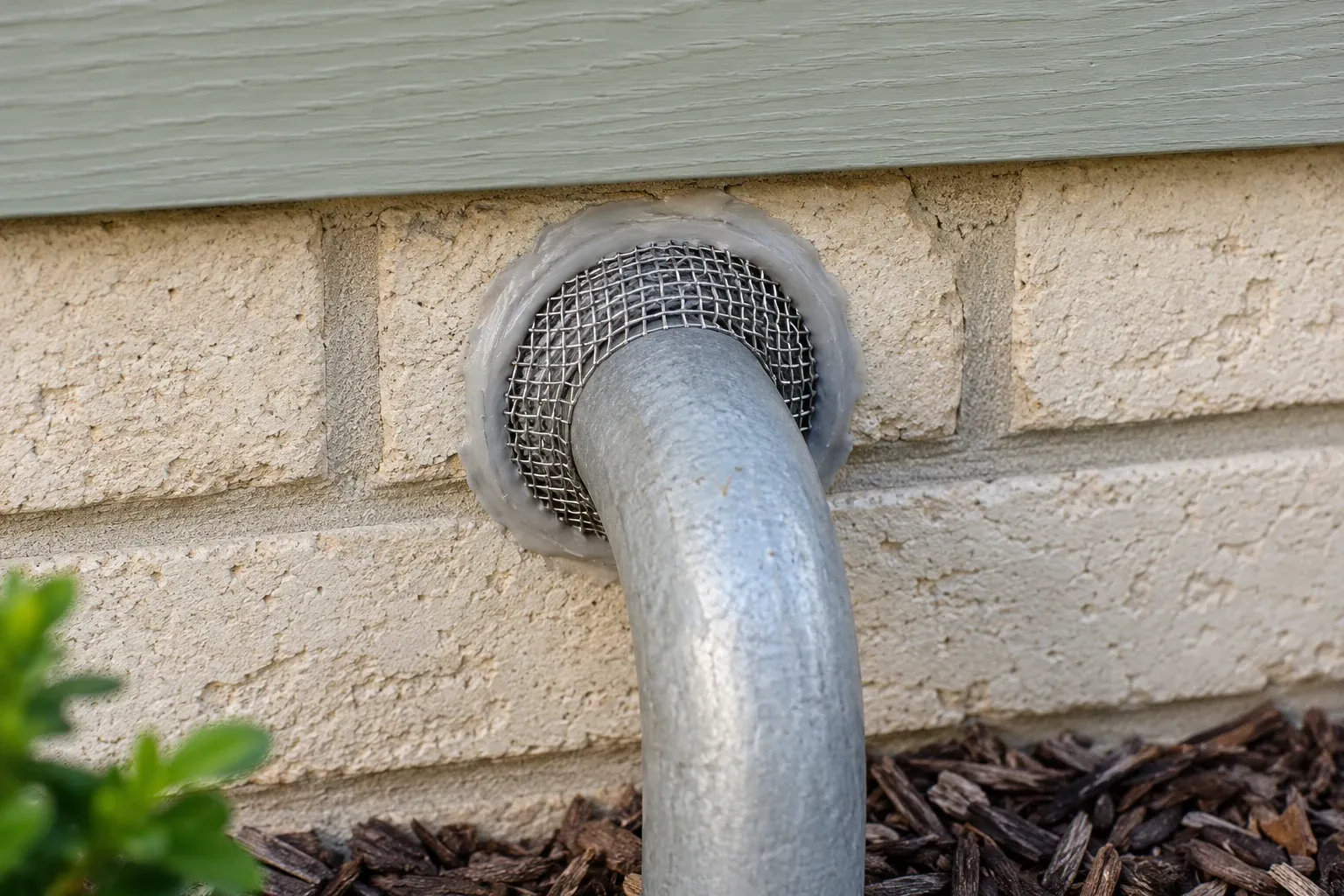
Water pipes, gas lines, electrical cables, and other utilities pass through exterior walls. If the openings around them aren't properly sealed, mice may squeeze through the remaining space.
Check where utility lines enter the basement, garage, or exterior siding. Indoors, look beneath sinks, behind appliances, and around furnace or water-heater connections.
2. Openings Beneath Garage Doors
A garage door may appear closed while leaving a gap underneath.
Worn bottom seals, damaged weatherstripping, or uneven thresholds can create openings. Once inside an attached garage, rodents may find additional routes into the house.
Close the door and look for visible gaps near the floor and corners. Check the side seals as well.
3. Foundation Cracks and Wall Joints
Small cracks, damaged masonry, and gaps where siding meets the foundation deserve attention.
Not every foundation crack provides a route indoors. Some affect only the exterior surface. Look for openings that may connect to a basement, crawl space, or hidden wall cavity.
Droppings or gnaw marks near a gap can provide additional clues.
4. Gaps Around Exterior Doors and Windows
Doors that don't close tightly may leave space beneath the threshold or along the frame.
Check worn weatherstripping, damaged door sweeps, and openings around basement windows.
Windows and screens should fit properly, particularly where they open into basements or other accessible areas.
A small gap may be enough for a mouse to enter without leaving obvious damage.
5. Damaged Attic and Crawl-Space Vents
Vents allow airflow through attics and crawl spaces, but damaged screens or covers may also leave openings for rodents.
Check for loose covers, broken screening, gnaw damage, and missing material around vent frames.
These areas may be difficult to reach. Inspect them from a safe location rather than climbing onto the roof or entering an unsafe crawl space.
6. Openings Around Eaves, Soffits, and Rooflines
Rodents don't always enter near the ground.
Mice can climb rough surfaces, and some rats are strong climbers. Gaps around roof edges, soffits, and eaves may provide access to attic spaces.
A soffit is the underside of a roof overhang. If its panels or connecting materials are damaged, openings may become accessible.
Inspect visible roofline gaps from the ground and arrange a closer inspection when necessary.
7. Damaged Siding and Exterior Wall Openings
Loose siding, damaged trim, and openings where different building materials meet can expose gaps behind an exterior wall.
These spaces may connect to framing cavities that rodents use to move through the house.
Pay particular attention to damaged corners, utility penetrations, and places where earlier repairs have separated from the surrounding material.
8. Dryer Exhausts and Other Exterior Outlets
Exterior exhaust outlets and ventilation openings may attract attention when their covers are damaged or missing.
However, dryer exhausts must not be covered with improvised screens or materials that trap lint or restrict airflow. Blocked dryer vents can create a fire hazard.
Use equipment approved for the particular vent, and have damaged exhaust components repaired correctly.
The same principle applies to combustion-air and other required ventilation openings.
9. Openings Beneath Porches, Decks, and Skirting
Covered areas beneath porches, decks, or manufactured-home skirting may hide gaps that are difficult to see.
Check where these structures connect to the house, especially near foundations and utility lines.
Rodents may shelter beneath outdoor structures without entering the home. Look for an actual opening and supporting signs before assuming the space connects indoors.
How to Tell Whether Rodents Are Using an Opening
Finding a gap doesn't automatically mean mice or rats are entering through it.
Look for evidence around the opening:
- Droppings: Small pellets or larger rat droppings near the suspected route.
- Gnaw marks: Damage to surrounding wood, plastic, or other materials.
- Rub marks: Dark marks along surfaces repeatedly used by rodents.
- Tracks: Footprints or disturbed dust near sheltered pathways.
- Repeated sightings: Mice or rats disappearing into the same opening.
Several clues together are more useful than one suspicious hole.
If you find droppings, avoid touching them or sweeping them while dry. Follow the CDC's safe rodent cleanup guidance.
How to Find Rodent Entry Points Around Your House
You can begin with a simple inspection without opening walls or disturbing suspected nests.
Start With the Exterior
Walk around accessible parts of the house during daylight.
Check doors, foundation joints, visible utility connections, vents, and garage thresholds. Photograph suspected openings so you can compare them with the areas where you've noticed activity.
Check the Rooms Inside
Look for signs near the corresponding interior areas.
For example, if there's a gap around an exterior basement pipe, check nearby accessible storage spaces and utility areas for droppings or gnaw marks.
The signs may help establish whether rodents are moving farther into the house.
Follow the Evidence, Not Just the Noise
A mouse heard inside an upstairs wall may have entered near the foundation and traveled upward through connected spaces.
Don't assume the opening is directly behind the wall making noise.
For more information about hidden activity, read our signs of mice in walls guide.
Should You Seal Entry Points if Rodents Are Still Inside?
Entry-point sealing is an important part of rodent prevention, but the timing matters.
If mice or rats are already inside, closing suspected active openings without assessing the infestation may trap them in hidden spaces.
Treatment and rodent exclusion should be coordinated so the current infestation is addressed while new entry is reduced. Our Rodent Control Janesville WI overview explains this combined approach.
Repairs may involve metal mesh, flashing, masonry work, or suitable door sweeps. The materials depend on the location and surrounding structure.
Expanding foam alone is not a dependable barrier where rodents can gnaw through it.
Learn more about our Rodent Exclusion service and how exclusion differs from rodent extermination.
How to Reduce Rodent Activity Around Your Home
Entry-point repairs become more effective when food and shelter around the property are also addressed.
Store pet food and birdseed in sealed containers, keep garbage bins closed, and clean up spilled food.
Reduce unnecessary clutter near foundations and inspect damaged door seals or vent covers before they become larger problems.
These steps help reduce conditions that attract rodents. They don't replace treatment for mice or rats already inside.
Frequently Asked Questions
Can Mice Get Into a House Through Tiny Holes?
Yes. House mice can squeeze through openings about one-quarter inch wide. Check small gaps around pipes, foundations, doors, and other exterior connections.
Can Rodents Enter Through the Roof?
Yes. Mice and some rats can climb and use openings around rooflines, soffits, or attic vents. However, scratching in an attic doesn't automatically identify the type of rodent.
Can Mice Enter Through Garage Doors?
Yes. Worn bottom seals, damaged side weatherstripping, and uneven thresholds can leave openings. Attached garages may also have additional gaps leading toward living spaces.
Can Rodents Chew Through Expanding Foam?
Yes. Foam by itself is not a reliable rodent-resistant barrier. Suitable metal or masonry materials may be necessary, depending on the opening.
Can Rodents Enter a New House?
Yes. New construction doesn't guarantee that every utility connection, vent, or door threshold is fully sealed. The condition of the openings matters more than the home's age.
Does Finding a Hole Mean Rodents Are Inside?
Not necessarily. A gap may be accessible without currently being used. Look for droppings, gnaw marks, tracks, or sightings to help determine whether rodents are active.
Do I Need Professional Rodent Exclusion?
Consider professional exclusion when openings are difficult to identify, rodents keep returning after treatment, or repairs involve inaccessible rooflines, vents, or structural areas.
Still Finding Mice or Rats Inside Your Home?
Found droppings in the kitchen, scratching behind the walls, or gaps around your garage and foundation?
Janesville Rodent Pros provides rodent control, mice control, rat control, and rodent exclusion services in Janesville, WI, and surrounding communities.
Tell us where you've noticed activity and get help identifying the next steps for treatment and entry-point concerns.